Markets do not always move in an orderly fashion. When institutions aggressively buy or sell, price can move so quickly that it leaves behind an imbalance where very little trading takes place. This imbalance is known as a Fair Value Gap (FVG).
📖 In One Sentence
A Fair Value Gap (FVG) is a price imbalance created by a strong impulsive move, leaving an area that price often revisits before continuing in the original direction.
Learning Objectives
- Understand what a Fair Value Gap is.
- Recognise bullish and bearish Fair Value Gaps.
- Learn why price often returns to fill imbalances.
- Use Fair Value Gaps together with BOS, CHoCH and Order Blocks.
Definition
A Fair Value Gap is an imbalance in price caused by a strong impulsive move. During this move, price travels so quickly that one side of the market has little opportunity to trade.
Because of this imbalance, price frequently retraces into the gap before continuing in the original direction. Traders use these retracements as potential entry opportunities.
Concept Diagram
The illustration below demonstrates Fair Value Gaps as areas where price imbalances occur after strong market moves. These areas often act as potential entry points when price retraces into them.
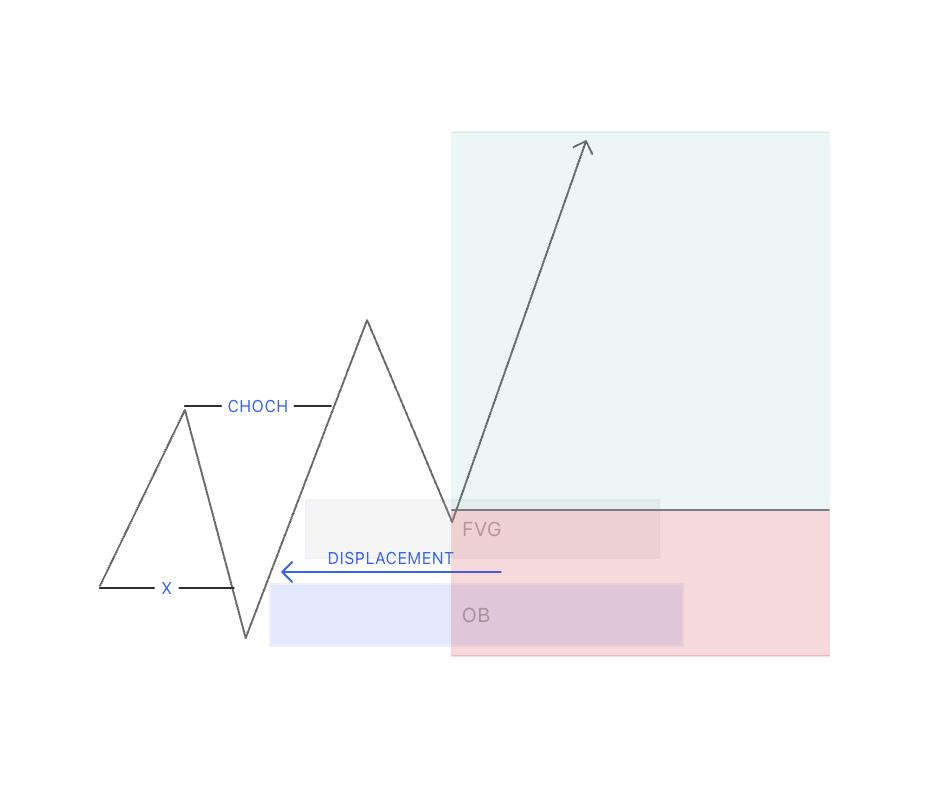
A FVG is created when price moves aggressively, leaving an imbalance that the market often revisits before continuing in the original direction.
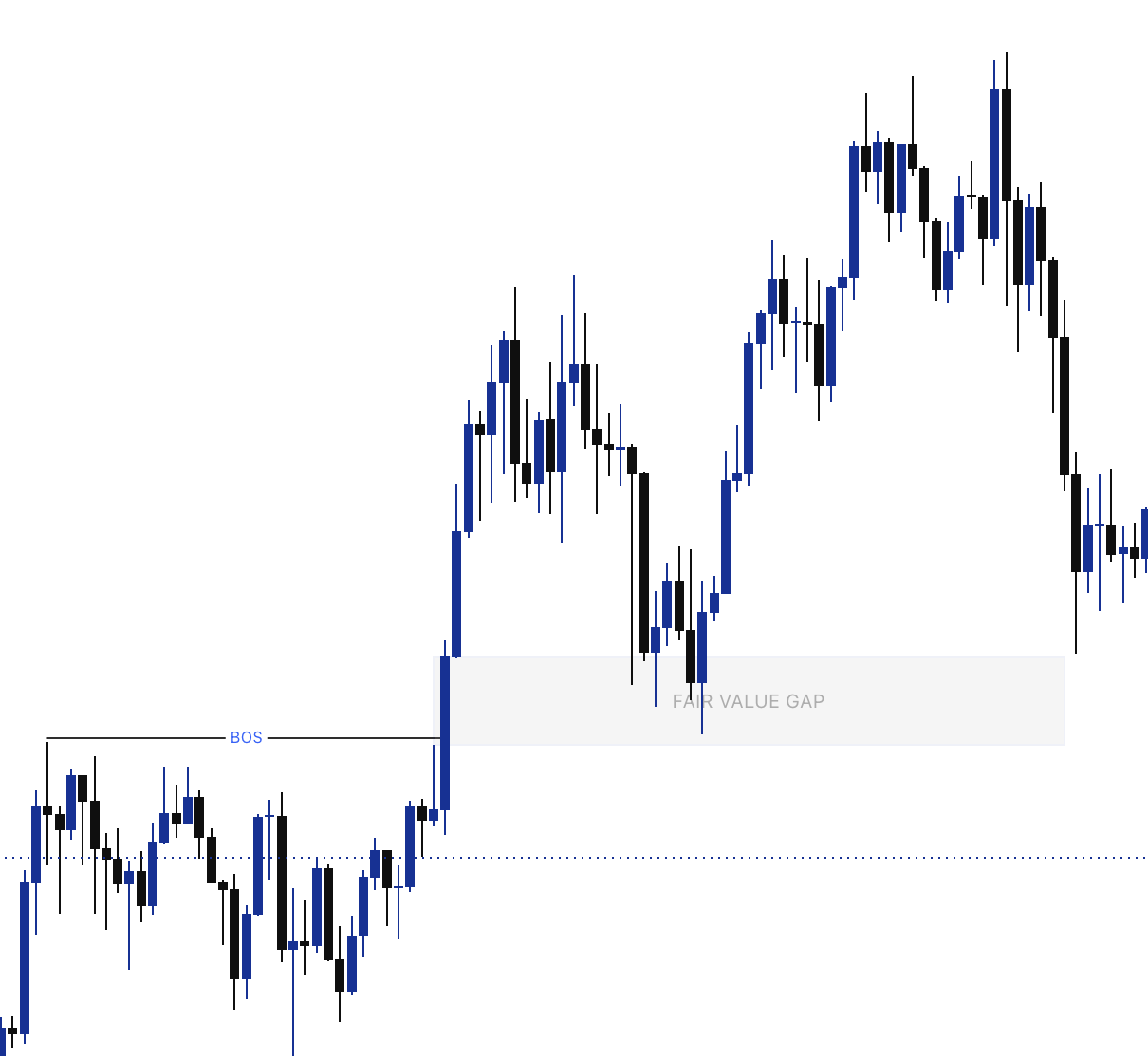 Figure 1. A Bullish Fair Value Gap (FVG) where price leaves an imbalance before retracing into the gap and continuing higher.
Fair Value Gap
Price leaves behind an imbalance after an aggressive bullish move. The highlighted gap becomes an area where traders expect price to retrace before continuing higher.
Why Fair Value Gaps Matter
Institutions rarely enter all of their positions at a single price. Strong market moves often leave behind inefficiencies that the market later revisits.
Rather than chasing price, many traders wait for a retracement into a Fair Value Gap before looking for confirmation to enter.
Bullish vs Bearish Fair Value Gaps
📈 Bullish Fair Value Gap
Forms after a strong bullish impulse. Traders watch for price to retrace into the gap before looking for buying opportunities.
📉 Bearish Fair Value Gap
Forms after a strong bearish impulse. Traders watch for price to retrace into the gap before looking for selling opportunities.
How to Identify a Valid Fair Value Gap
Common Mistakes
- Trading every Fair Value Gap without context.
- Ignoring higher timeframe market structure.
- Entering before price confirms the reaction.
- Assuming every gap will be completely filled.
Key Takeaways
- Fair Value Gaps represent price imbalances.
- Price often revisits imbalances before continuing.
- Not every gap is a trading opportunity.
- Combine FVGs with BOS, CHoCH, Liquidity and Order Blocks.
Practice Finding Fair Value Gaps
Open a chart and identify strong impulsive moves. Look for the three-candle imbalance they create, then observe how price reacts when it later returns to that area.
Open a Demo Trading Account →